

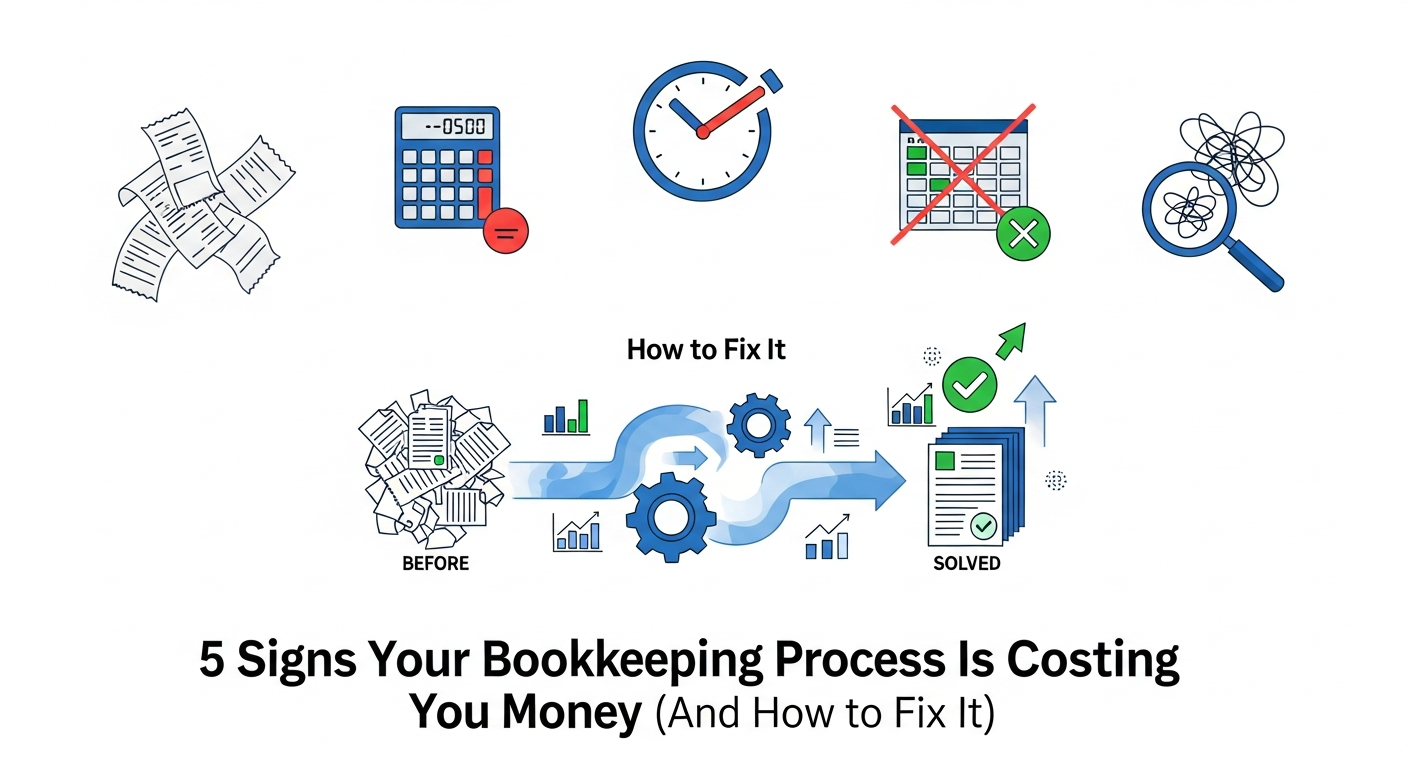
Many small business owners believe bookkeeping is simply about recording transactions, but inefficient processes can quietly erode profits through duplicate payments, missed discounts, and costly late fees. According to a common concern among entrepreneurs, “Bookkeeping isn’t just a back-office task; it’s a strategic function that, when mismanaged, can severely impact cash flow and growth potential.” If your bookkeeping process is slow, error-prone, or disorganized, you’re likely losing money without even realizing it. Here are five signs your bookkeeping is costing you money—and how to fix them to save costs and gain peace of mind.
1. You’re Spending Too Much Time on Bookkeeping Instead of Growing Your Business
Many small business owners spend dozens of hours monthly managing finances themselves. Studies show the average small business owner may spend about 80 hours per year on bookkeeping, which can amount to thousands of dollars in lost opportunity cost if that time were spent on revenue-generating activities instead. This frustration with wasted time is a significant source of anxiety for owners who want to focus on growth, not spreadsheets.
How to fix it: Consider outsourcing your bookkeeping to a fractional CFO or a QuickBooks ProAdvisor. These professionals streamline your bookkeeping using best-in-class software and expertise, freeing up your time while maintaining accurate records. Outsourcing can cost between $900 to $2,500 per month, depending on your business size and complexity, but it often saves far more by reducing errors and improving financial insight.
2. You Frequently Encounter Errors or Discrepancies in Your Books
Errors such as duplicated payments, incorrect expense categorization, or unreconciled bank statements are common in inefficient bookkeeping. These mistakes can lead to overpayments, missed tax deductions, or even penalties. For example, small businesses incur an average annual penalty cost of about $845 due to bookkeeping errors and compliance issues. Such hidden costs add up quickly and cause unnecessary stress.
How to fix it: Implementing a systematic, software-driven bookkeeping process with regular reconciliations can catch errors early. A QuickBooks ProAdvisor can set up automated workflows and controls to minimize human mistakes. At the same time, a fractional CFO can review financials regularly to identify red flags before they impact your bottom line.
3. You’re Missing Out on Vendor Discounts and Paying Late Fees
Inefficient bookkeeping often results in late payments or duplicate payments. Missing early payment discounts wastes money, and late fees add avoidable expenses. These hidden costs quietly eat into your profits and create cash flow headaches.
How to fix it: Engaging a professional bookkeeping service or a fractional CFO helps ensure timely, accurate accounts payable management. They can set up vendor payment schedules to capture all available discounts and avoid late payments, turning bookkeeping from a cost center into a source of savings.
4. Your Financial Reports Are Inaccurate or Delivered Too Late to Inform Decisions
Good bookkeeping is about more than recording transactions — it’s about providing timely, accurate financial insights so you can make informed business decisions. Many small business owners only review their books quarterly or annually, leading to surprises and missed opportunities.
How to fix it: A fractional CFO or QuickBooks ProAdvisor can provide real-time financial dashboards and monthly reports that highlight cash flow, profitability, and budget variances. This proactive approach reduces anxiety by giving a clear view of where your money goes and what actions are required.
5. You Feel Overwhelmed by Technology and Compliance Requirements
Bookkeeping software and tax regulations change frequently, creating complexity that frustrates small business owners. Trying to keep up without expert help can lead to costly errors or missed deadlines.
How to fix it: Partnering with a QuickBooks ProAdvisor or fractional CFO means you gain access to experts who stay current on technology and compliance. They can automate tax filings, payroll integration, and regulatory reporting, reducing your mental load and risk exposure.
Why Many Business Owners Underestimate the True Cost of Bookkeeping
It’s a common misconception that bookkeeping is just about entering numbers. In reality, inefficient bookkeeping silently drains profits through errors, missed discounts, and late fees while consuming valuable time. The cost of DIY or part-time bookkeeping often far exceeds the cost of professional services once you factor in hidden expenses and opportunity costs.
Outsourcing to a fractional CFO or a QuickBooks ProAdvisor is a cost-effective way to streamline your bookkeeping. These professionals leverage technology and expertise to catch errors early, optimize cash flow, and deliver strategic financial insights. Instead of feeling overwhelmed and anxious, business owners gain relief by finally understanding where their money goes and how to control it.
By investing in a streamlined bookkeeping process, you’re not just paying for transaction recording—you’re investing in cost savings, better business decisions, and peace of mind that your finances are working for you, not against you.
Ready to Take Control of Your Business Finances?
Protecting your profit starts long before tax time or a future sale—it begins with how your books, documentation, and workflows run every day. When those pieces are fragile or ad‑hoc, you live with hidden risk: missed deductions, avoidable tax bills, bad decisions, and the constant worry that something important is slipping through the cracks.
At ProjectBits, the work is simple to describe and powerful in its impact: clean, tax‑ready books; contemporaneous documentation that can stand up to scrutiny; and practical AI‑assisted workflows that quietly protect your profit instead of adding to your plate. You get the benefit of CFO/CIO‑level thinking translated into small‑business systems your bookkeeper or VA can actually run.
If this resonates, the next move is easy and low‑risk: request the Tax Ready Bookkeeping book and Resource Kit. You will see, step by step, how to close the leaks, protect more of what you earn, and turn your financial system from a source of anxiety into a real asset for your business and your life. When you are ready, schedule a brief conversation to walk through your Tax Ready Bookkeeping Assessment and discuss what this could look like in your situation.
Tax Ready Bookkeeping