

# How Dual-Language Policies Transform Your QuickBooks Transaction Workflow
Your accounting team is drowning in spreadsheets. Every morning, someone manually reviews transactions, checking them against rules that exist only in someone’s head or buried in a dusty policy document. A payment gets coded incorrectly. An invoice slips through without proper approval. A compliance requirement gets overlooked. Sound familiar?
Most small business owners assume policies are just bureaucratic necessities—dense documents written in corporate jargon that only humans can parse. But what if your accounting policies could speak two languages fluently: one for your team, and one for your automation tools?
This is the power of dual-language policies in QuickBooks. When you structure your transaction workflows to be readable by both humans and AI systems, you transform how your business processes money. You eliminate the gap between what your team *should* do and what they *actually* do. You catch errors before they cascade into bigger problems. And most importantly, you reclaim hours of your team’s time for work that actually moves your business forward.
## The Hidden Cost of Single-Language Policies
Traditional accounting policies are written for human consumption. They’re narrative-based: “When a vendor invoice arrives, the AP team should review it for accuracy, match it to the purchase order, and route it to the appropriate department head for approval.” Clear enough for a person to understand. Impossible for your QuickBooks automation to enforce.
This creates a painful reality for growing businesses. Your policies exist in a vacuum, separate from your actual transaction processing. Your team tries their best to follow the rules, but manual review is slow, inconsistent, and error-prone. One person interprets a policy differently than another. A tired bookkeeper misses a detail on a Friday afternoon. A vendor invoice gets coded to the wrong account because the rule wasn’t top-of-mind.
The result? Human error creeps in. Compliance gaps widen. Your financial data becomes less reliable, even though you have clear policies on paper.
## What Dual-Language Policies Actually Mean
A dual-language policy is one structured so that both your team and your automation systems understand it equally well. In practical terms, this means your QuickBooks workflows, approval rules, and transaction categorization logic are documented in a way that:
– **Humans can read and understand** the reasoning behind each rule
– **AI systems and automation tools can interpret and enforce** those same rules automatically
– **Both stay in sync** so there’s no disconnect between policy and practice
For example, instead of a narrative policy that says “All expenses over $5,000 require VP approval,” a dual-language policy specifies: “IF transaction amount > $5,000 AND expense category = [specific codes] AND vendor = [list] THEN route to VP approval workflow AND send automated reminder if unapproved after 2 business days.”
Your team reads the human-friendly version and understands the intent. Your QuickBooks automation reads the structured version and enforces it flawlessly, every single time.
## The Three Transformations You’ll Experience
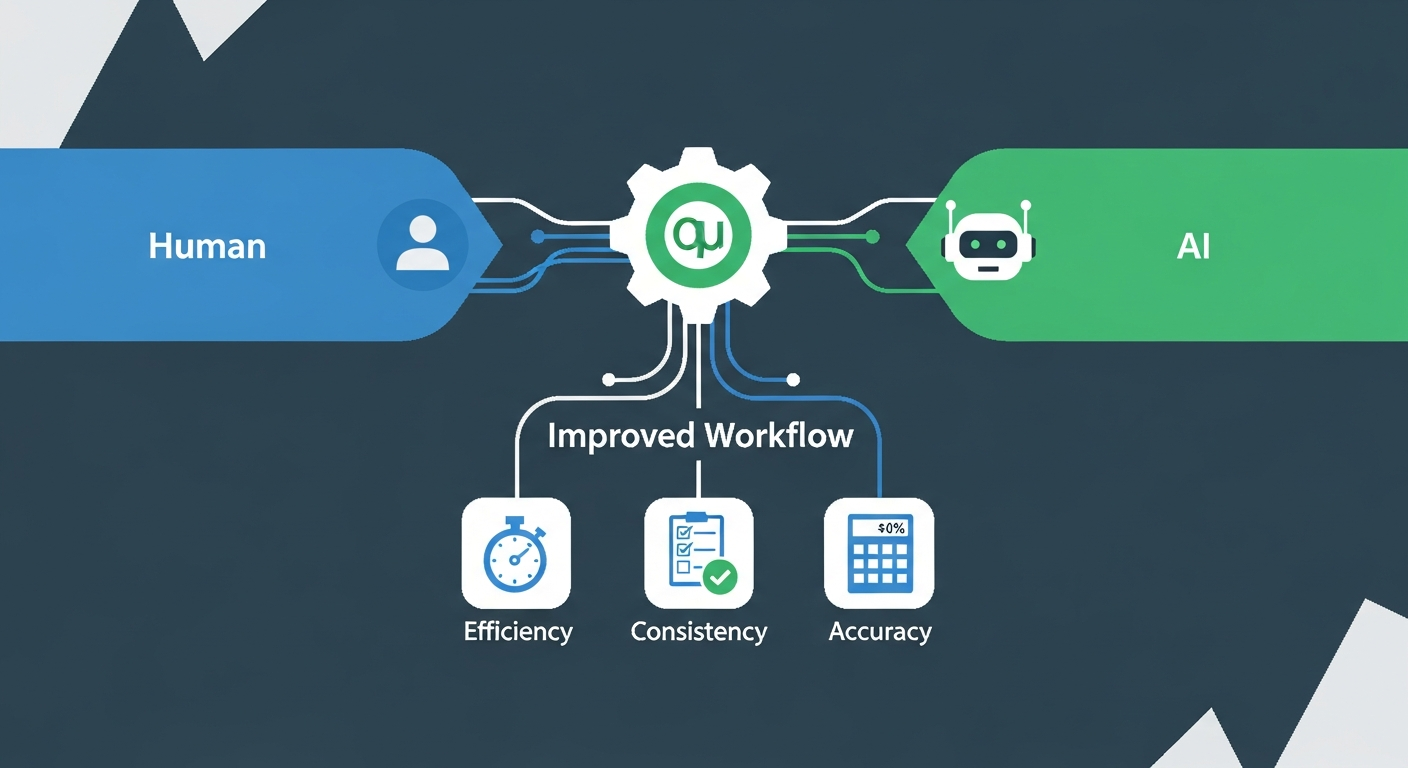
**Consistency that actually happens.** When rules are enforced by automation rather than human memory, they apply the same way every time. Whether it’s the first transaction of the day or the hundredth, whether it’s processed by your newest hire or your most experienced bookkeeper, the outcome is identical. This consistency is the foundation of reliable financial data.
**Errors caught before they become problems.** Automation doesn’t get tired. It doesn’t miss details. When a transaction violates your policies—wrong account coding, missing approval, duplicate entry—your system flags it immediately, not three months later during reconciliation. This early detection saves you from compounding errors and makes month-end close dramatically faster.
**Your team freed to think strategically.** When routine transaction review is automated, your accounting staff stops being data-entry clerks and becomes financial analysts. They can focus on understanding cash flow patterns, identifying cost-saving opportunities, and providing business insights instead of manually checking invoices against rules.
## The Small Business Owner’s Real Concern
As one small business owner recently expressed: “I worry that if I automate too much, I’ll lose control. What if the system makes a mistake and I don’t catch it? And honestly, I don’t have the budget for a fancy automation consultant to set all this up.”
This concern is legitimate—and completely addressable. The key is that dual-language policies aren’t about removing human oversight. They’re about making your oversight *smarter*. Instead of reviewing every transaction, you review the policies that govern transactions. You set the rules once, verify they’re correct, and then let automation enforce them consistently. You maintain control at the policy level rather than the transaction level, which is actually more powerful.
## Where a Fractional CFO or QuickBooks ProAdvisor Becomes Invaluable
This is where professional guidance transforms the process. A fractional CFO or certified QuickBooks ProAdvisor brings three critical advantages:
They understand both the accounting principles *and* the technical capabilities of QuickBooks. They can translate your business needs into policies that automation can actually enforce. They’ve seen what works and what doesn’t across dozens of businesses, so they help you avoid costly mistakes.
More importantly, they help you *design* your policies from the start with automation in mind. Rather than retrofitting existing policies to work with automation tools, you build them correctly the first time. This saves months of frustration and ensures your automation actually delivers the efficiency gains you’re expecting.
A ProAdvisor can also set up your QuickBooks workflows, bank feeds, recurring transactions, and approval routing so that your policies execute automatically. They turn your dual-language policies from theory into daily practice.
## Your Path Forward
The businesses winning in today’s economy aren’t the ones with the most sophisticated accounting systems. They’re the ones who’ve eliminated the friction between their accounting policies and their actual practice. They’ve written policies that both their team and their tools understand. They’ve automated the routine so they can focus on the strategic.
Your QuickBooks system is ready for this transformation. Your team is ready. The only question is: are you ready to stop treating policies as documents that sit on a shelf and start treating them as the operating system that runs your financial accuracy?
That’s the power of dual-language policies. That’s how you transform your transaction workflow from a source of stress into a source of competitive advantage.
—
## Ready to Take Control of Your Business Finances?
Don’t let outdated beliefs or a lack of oversight put your business at risk. By combining innovative technology, sound legal structure, and expert financial guidance, you’ll build a compliance watchdog that protects your company and your peace of mind. The proper support means every expense is accounted for—no matter who’s making the purchase—and nothing ever “slips through.”
By investing in professional financial guidance, you’re not just preparing for a sale. You’re creating peace of mind, stability, and options for yourself and those who matter most.
**Don’t wait for “someday.” Start building your sellable business today.**