

This week Satya Nadella walked through an app his team built from a single analyst PDF — planned with one skill, built on autopilot, tested, and shipped. His point wasn’t the app. It was where everything lived: the app under one control plane, the code in enterprise Git, the data in a governed lake, all under one set of IT, security, and cost controls.
He’s right about the thing that matters.
The durable value of an AI system isn’t the output it generates — it’s the rails that make every output a governed, reusable, auditable asset instead of a screenshot you can’t defend later.
A generated spreadsheet is disposable. A generated decision that cleared a policy, named its owner, and left a receipt is an asset. That distinction is the whole game, and it’s good to see it said plainly at that altitude.
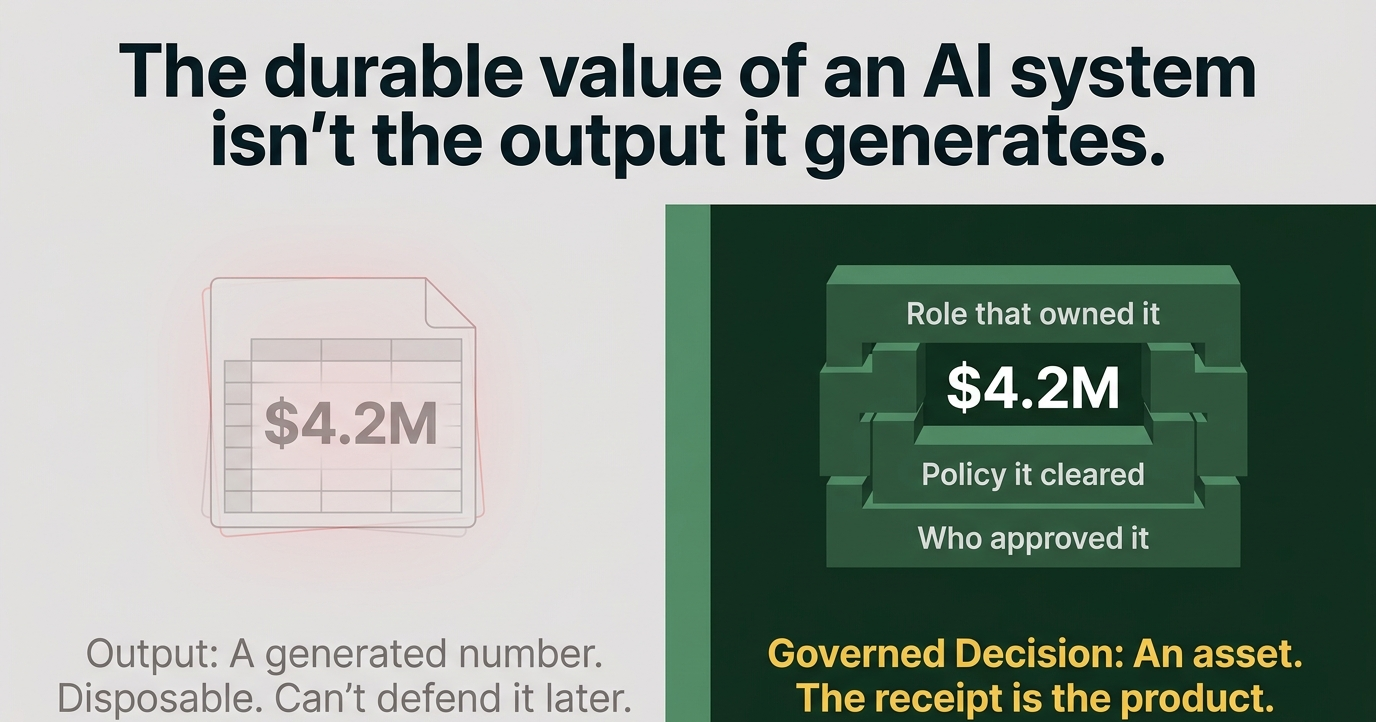
Output vs. governed decision: the same number, wrapped in the record of who owned it, what policy it cleared, and who approved it.
The one rail the demos skip
For finance, there’s one more rail those demos don’t need — and a fractional CFO can’t ship without.
Enterprise controls answer who ran it. A CFO’s board and lender ask a harder question: which role was accountable for the judgment? The assumption behind a forecast, the reconciliation that says the books are right, the sign-off that lets a number leave the building — those aren’t one undifferentiated "the AI did it." Each is owned by a distinct role, and in a governed system that ownership is enforced at the moment the work runs, not reconstructed from memory afterward.
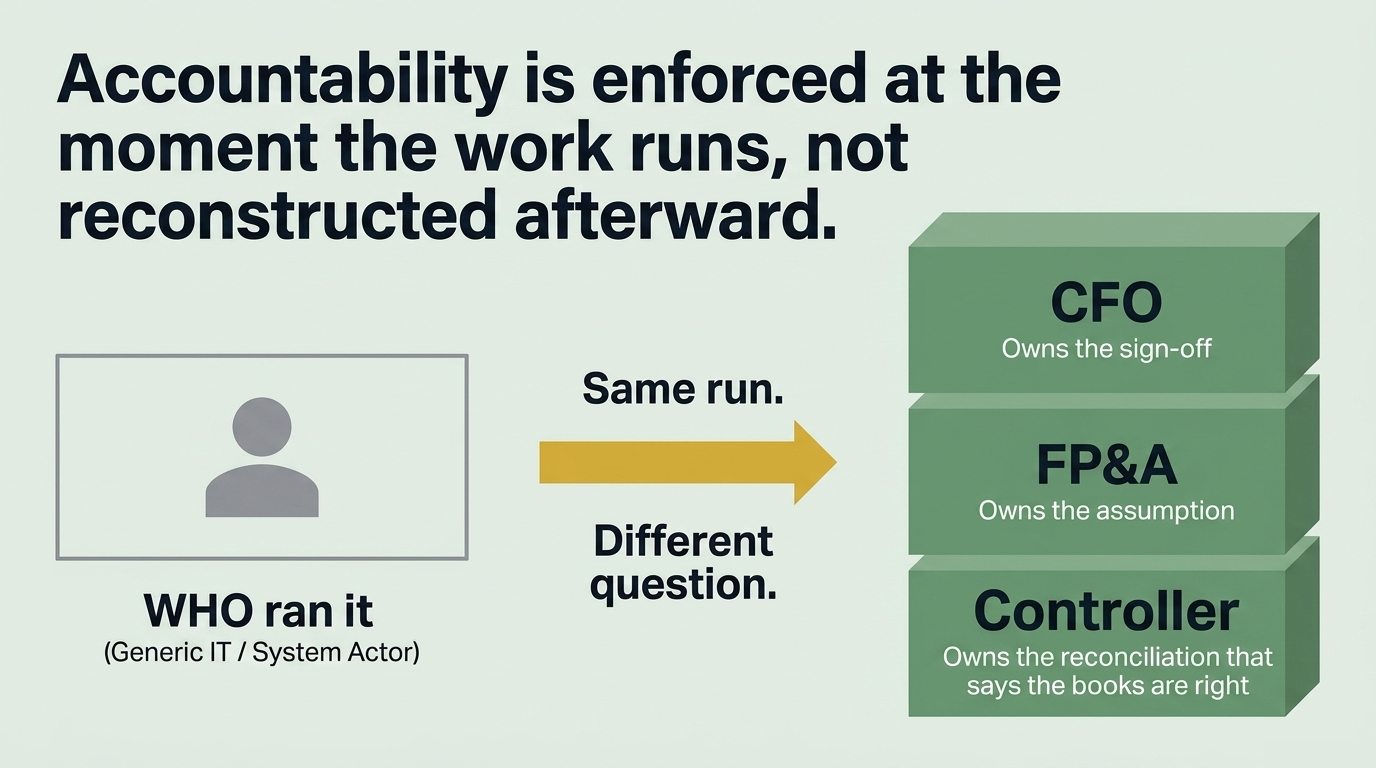
Same run, different question: enterprise controls name who ran it; fiduciary accountability names the role that owned each judgment.
A record, not a story
So when the question comes — who decided this, and on what basis? — the answer isn’t a story. It’s a record: which role owned the assumption, what policy it cleared, who approved it before it counted.
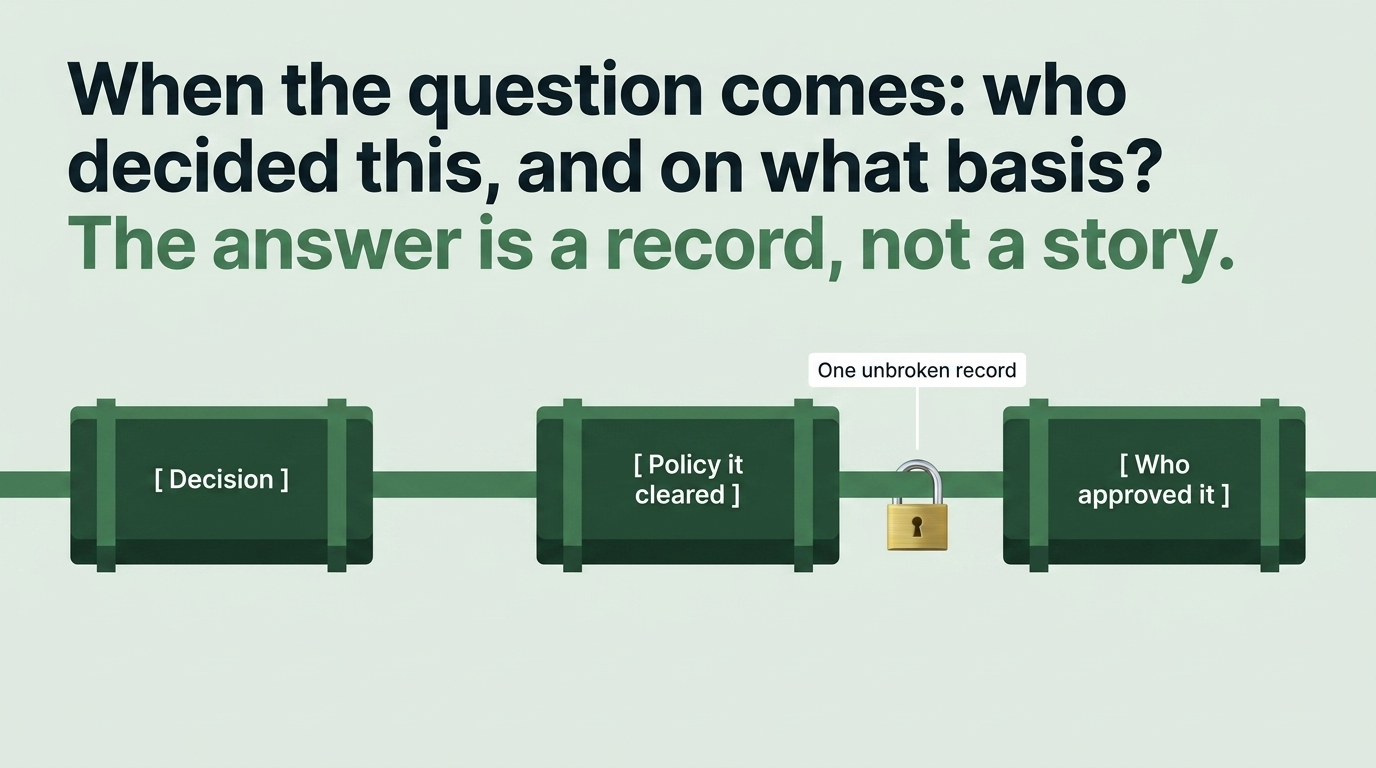
One unbroken record links the decision, the policy it cleared, and who approved it — landed in a log that can’t be quietly edited.
One more thing that follows from taking this seriously. A system built this way doesn’t put real financials on a demo screen to prove it works — a governed sandbox does that. By design, your numbers stay in your governed system of record and the work happens there. That’s not a privacy promise bolted on; it’s what the architecture already is.
That’s the part worth building for. Not a faster way to generate a number — a governed way to stand behind one.
If this frame resonates, the governance underneath it is worth a read: AI Sorcery: Don’t Be the Apprentice names the difference between ungoverned motion and governed initiative — and The Ledger Question, Answered shows what the record actually looks like once it’s running.
If you’re weighing what "AI for finance" should mean for a business your size, that’s the conversation I have every week.